

Common Mistakes in the Go Fish Card Game
Remember that classic card game from your childhood, asking friends to “Go Fish”? Whether you’re teaching it to a new generation or just need a refresher, this guide settles the common debates once and for all. Most confusion comes from unique “house rules” that families create, but the official game is far simpler than most people think. To know more, check out UFAC4
The entire goal is to collect sets of four identical cards—like all four 8s or all four Jacks—which are called “books.” These are the definitive Go Fish instructions for beginners, kids, and adults alike, designed to get you playing a smooth, argument-free game in minutes.
Mistake #1: Not Knowing the Goal or How to Deal Correctly
In Go Fish, the goal is simple: collect the most “books.” A book is a complete set of four cards of the same rank—that’s the number or face value, like all four 5s or all four Jacks. At the end of the game, the player who has collected the most of these four-of-a-kind sets wins.
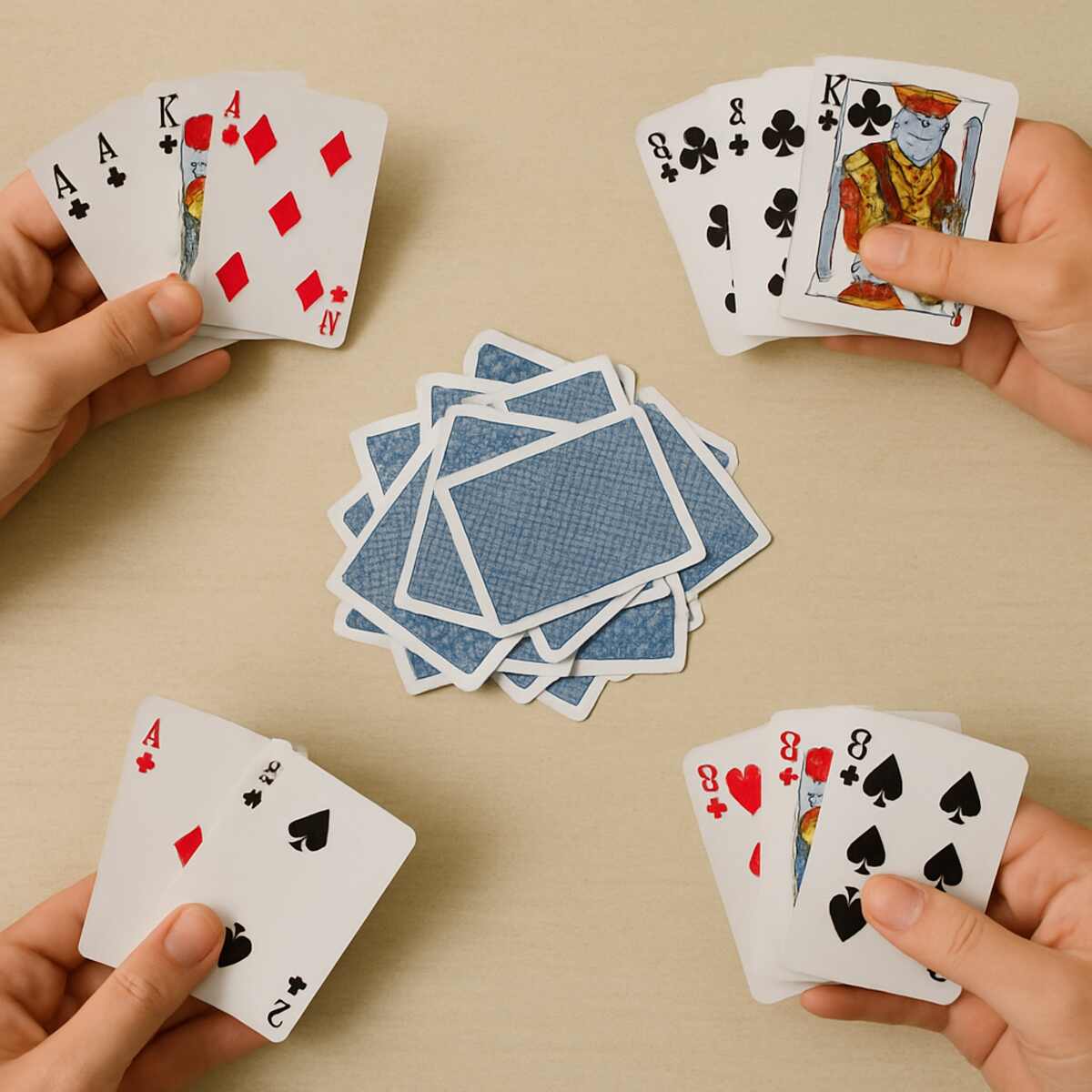
To get started, one person shuffles a standard 52-card deck and deals the cards. The number you deal depends on how many people are playing:
- For 2 or 3 players, deal seven cards to each person.
- For 4 or more players, everyone gets five cards each.
Players should hold their cards in their hand, keeping them secret from everyone else.
Place the leftover cards face-down in a single pile in the middle of the playing area. This pile is your draw pile, but it’s more commonly called the “pond” or the “ocean.” This is where you’ll “go fishing” for cards during the game. With the cards dealt and the pond established, you’re ready to play.
Mistake #2: Asking for a Card You Don’t Already Have
The most important rule when taking a turn is simple: you can only ask for a rank of card that you already have in your hand. This prevents wild guessing and is the key to the entire game. For example, if you are holding at least one 10, you are allowed to ask another player for their 10s. If you don’t have any Kings in your hand, you cannot ask anyone for a King. This single guideline is what separates Go Fish from a pure game of chance.
On your turn, pick a rank you hold, choose one specific opponent, and ask them for that rank. For instance, if you have a 4 of Diamonds, you can turn to the player on your left and say, “Alex, do you have any 4s?” You don’t need to specify the suit; you just ask for the general rank.
This “must have to ask” rule adds a fun layer of memory and deduction to the game. When you ask for 4s, you signal to everyone that you are trying to collect them. Paying attention to what other players ask for helps you figure out who has the cards you need later. But what happens if they don’t have the card you want? That’s what gives the game its famous name.
Mistake #3: Misunderstanding What “Go Fish!” Really Means
When you’ve asked a player for a card they don’t have, they will tell you, “Go Fish!” This is simply an instruction for you to take the top card from the face-down pile in the middle of the table (the “pond”).
What happens next depends on the card you draw:
- It’s the card you asked for! If you asked for a 7 and you happen to draw a 7, you’ve had a lucky dip. You must show this card to everyone to prove your luck. Then, you get a full bonus turn and can ask any player for any rank you hold.
- It’s any other card. If you draw a card that isn’t the rank you asked for, your turn is over immediately. Just add the new card to your hand quietly—don’t show it to anyone—and play passes to the player on your left.
Mistake #4: Hiding Your “Books” or Getting Them Wrong
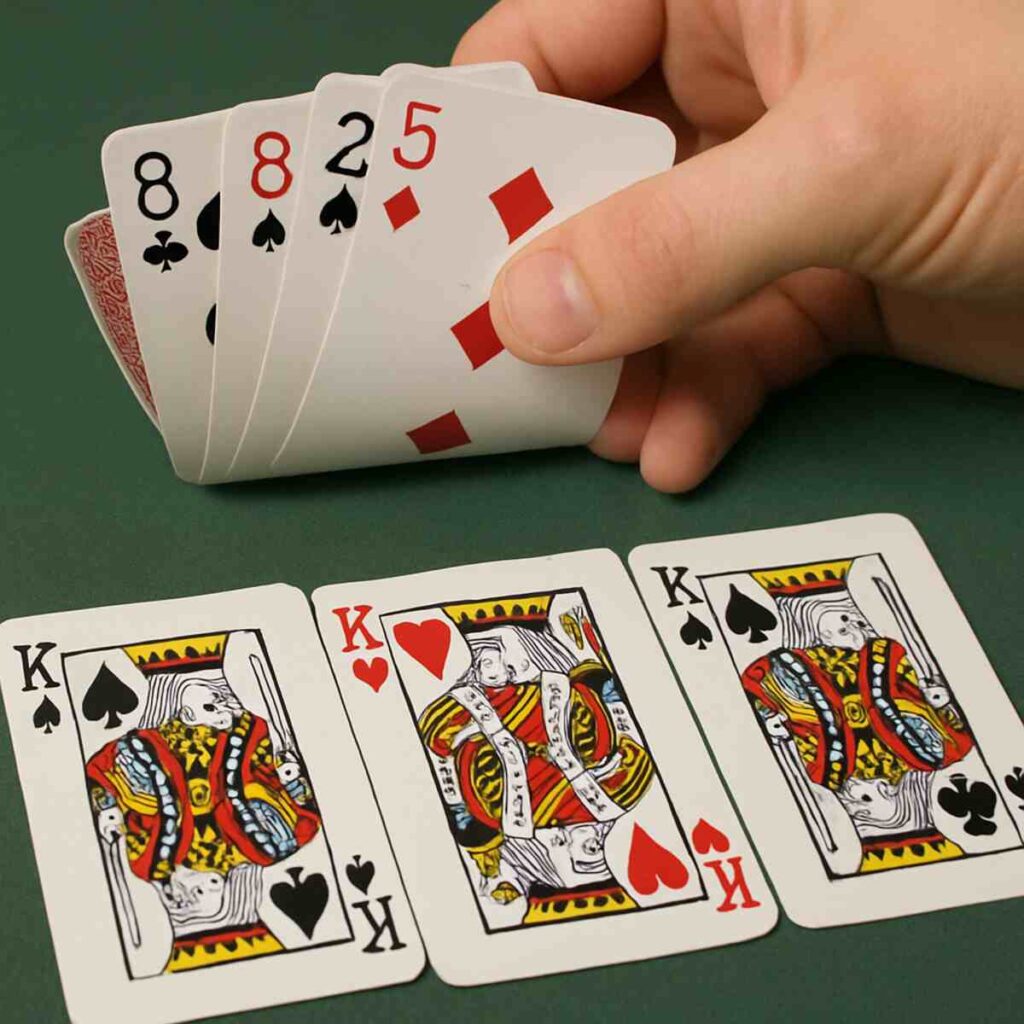
The reason for all that asking and fishing is to collect “books.” A book isn’t just two or three matching cards; it is a complete set of all four cards of the same rank. For example, you need the 8 of Spades, Hearts, Diamonds, and Clubs to make a book of 8s. Getting three of them is great, but it doesn’t count until you find the final card.
The moment you get the fourth card of a rank—whether from another player or the pond—you must immediately declare it. You can’t keep a completed book secret. Show the four matching cards to everyone and then place them in a neat, face-up pile in front of you. This is your scoring pile.
Laying down a book does more than just secure a point; it also gives you a powerful advantage. After you place a book on the table, your turn continues! You get to take another turn right away. Making a book is the most satisfying move in the game because it clears cards from your hand and keeps your momentum going.
Mistake #5: Stopping the Game When the Pond Runs Dry
A common point of confusion is what to do when the pond runs out of cards. Many groups mistakenly think the game is over, but this is where Go Fish enters its final, most interesting phase. The game doesn’t stop just because the fishing is done.
Once the pond is empty, the rules get even simpler. You still take turns asking other players for cards. If you ask for a rank and they have it, you take the card(s) and your turn continues. The only change is what happens when they don’t have your card. Since there’s nothing left to draw, the player just says you don’t have it, and your turn is simply over. Play immediately passes to the next person.
This “empty pond” phase continues until every single card is locked into one of the 13 possible books. The game officially ends only when the last book is formed. In these final turns, winning comes down to paying close attention to who has what, transforming Go Fish from a game of luck into one of memory and smart questioning.
Mistake #6: Playing with Zero Strategy (and How to Win More)
While Go Fish has luck, a simple secret can help you win more often. The key isn’t just what’s in your hand; it’s in paying attention to what other players are saying and doing. The easiest Go Fish strategy for winning is to listen carefully on every single turn, not just your own.
For instance, if you hear Dad ask Mom for Queens, you should immediately make a mental note: “Dad is collecting Queens.” When your turn comes around, you know exactly who to ask for Queens to complete your own book, instead of guessing randomly.
Even a failed attempt provides a clue. When someone tells you to “Go Fish!”, it’s like crossing a name off your list. If you ask your sister for 4s and she says she doesn’t have any, you’ve learned valuable information. Now you know not to waste a future turn asking her for them again.
By combining these two memory tricks—remembering what players have and what they don’t—you turn from a passive player into a clever detective. This simple layer of strategy is what makes the game so replayable for adults and older kids.
Mistake #7: Thinking There’s Only One Way to Play
The real beauty of this classic card game is its flexibility. Sticking to the exact same rules can make any game feel repetitive, but Go Fish is wonderfully easy to adapt. Depending on your crowd, you can tweak the rules for a totally different experience. Here are a few popular variations to try:
- Better for Two Players: A standard game of Go Fish with two players can feel slow. To fix this, deal more cards at the start—try seven or even ten cards each to get the action going faster.
- The “Expert” Memory Test: For a real challenge, you must ask for a specific card (e.g., “Do you have the Queen of Spades?”). If you’re wrong, you Go Fish.
- Team Play: With four people, play in 2-on-2 teams sitting across from each other. You can ask anyone for cards, including your partner, and all books you make are pooled for a team victory.
These variations also highlight what makes Go Fish unique compared to card games like Old Maid. While both are simple matching games, their goals are opposites. In Go Fish, you actively try to collect as many books as you can. In Old Maid, you do everything possible to avoid getting stuck with the odd card out. Don’t be afraid to experiment with the rules.
Go-Fish Cheat Sheet: Play a Perfect Game
Here are the essential rules to remember for a smooth game.
5-Minute Rulebook
- Goal: Collect the most “books” (4 of a kind).
- The Turn: Ask one player for one rank you already hold.
- Get a Card? Go again.
- Player says “Go Fish”? Draw one card from the pond. If it’s the rank you asked for, go again!
- Make a Book? Lay it down immediately.
The game ends when all 13 books are made, and the winner is the person with the most books. Now you’re all set. Grab a deck, gather some players, and have fun!
