
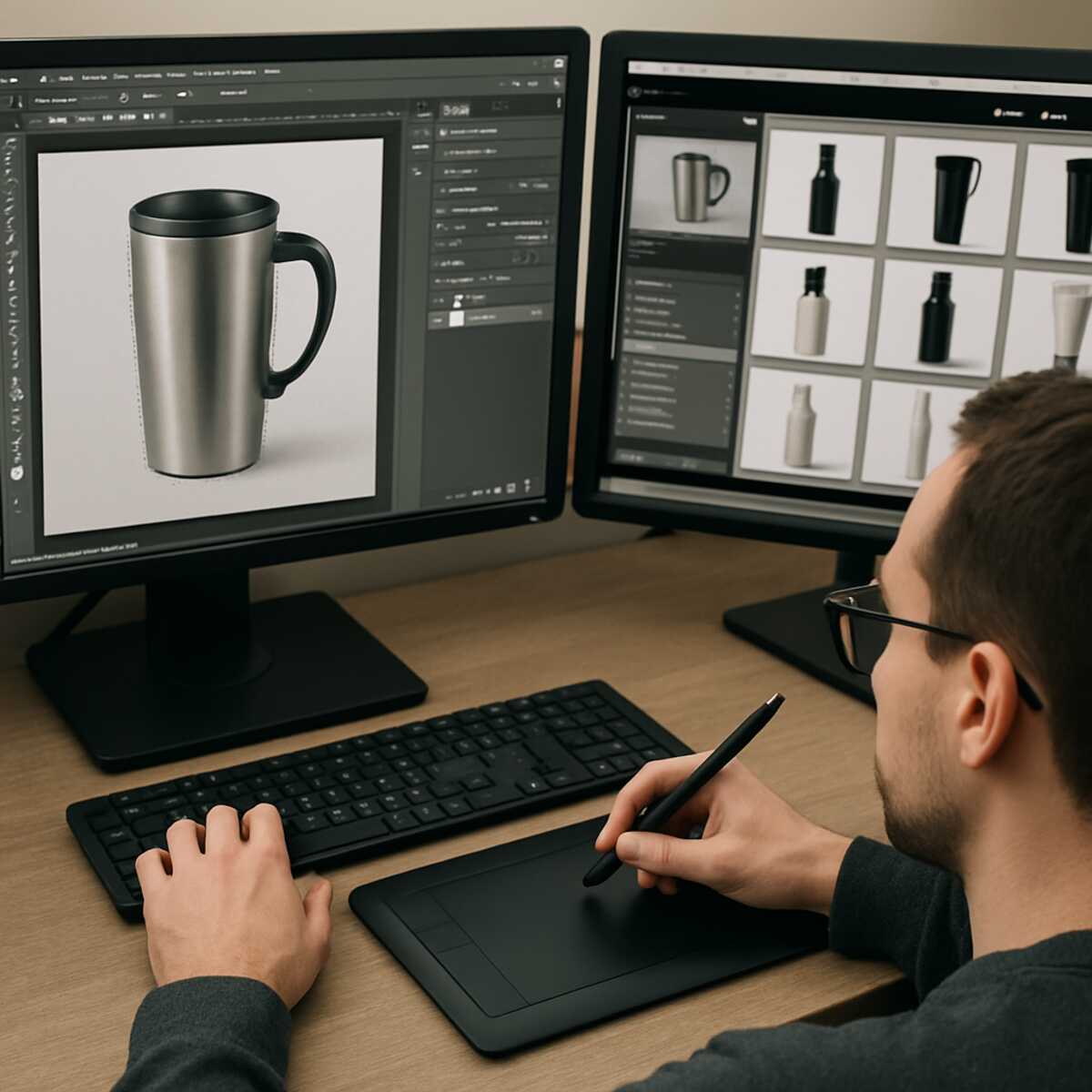

In the fiercely competitive world of e-commerce, digital marketing, and professional photography, visual presentation is everything. Whether you are selling a simple pair of sneakers or a complex, diamond-encrusted necklace, the quality of your images directly impacts your conversion rates. This is where professional image editing comes into play. Check out clippingpathwise.com to know more
Today, we are going deep into the world of photo manipulation, reviewing top industry providers—with a special spotlight on Clipping Path Wise—and exploring the exact techniques professionals use to make product photos pop. If you have ever wondered about the technical side of photo editing or are currently looking for a reliable partner for your business, this comprehensive guide has everything you need to know.
Chapter 1: The Foundation of Perfect Product Photography
Before we review the top agencies, we need to understand the mechanics of high-quality image editing. At the core of almost every product photo you see online is one fundamental process: background removal.
When a product is photographed, it is rarely shot in a way that allows it to be uploaded to an online store immediately. There are shadows, wrinkles in the backdrop, dust, and inconsistent lighting. Removing the background isolates the product, allowing it to be placed on a pure white canvas, a colored background, or seamlessly integrated into a larger graphic design project.
Understanding E-commerce Marketplace Requirements
If you are selling on major platforms, understanding how to create transparent backgrounds for Amazon, eBay, or Shopify is not just a stylistic choice; it is a strict requirement. Amazon, for example, mandates that all main product images must have a pure white background (RGB 255, 255, 255).
To achieve this, professional clipping path services are employed. A clipping path is essentially a digital silhouette drawn around an object using specialized software like Adobe Photoshop. Everything inside the path is kept, and everything outside the path is discarded or hidden.
Chapter 2: The Art and Science of Image Selection
For photographers and business owners alike, understanding the technical side of editing helps set realistic expectations for quality. So, how to remove image backgrounds professionally without making the product look like it was cut out with a pair of blunt scissors?
The Reign of the Pen Tool
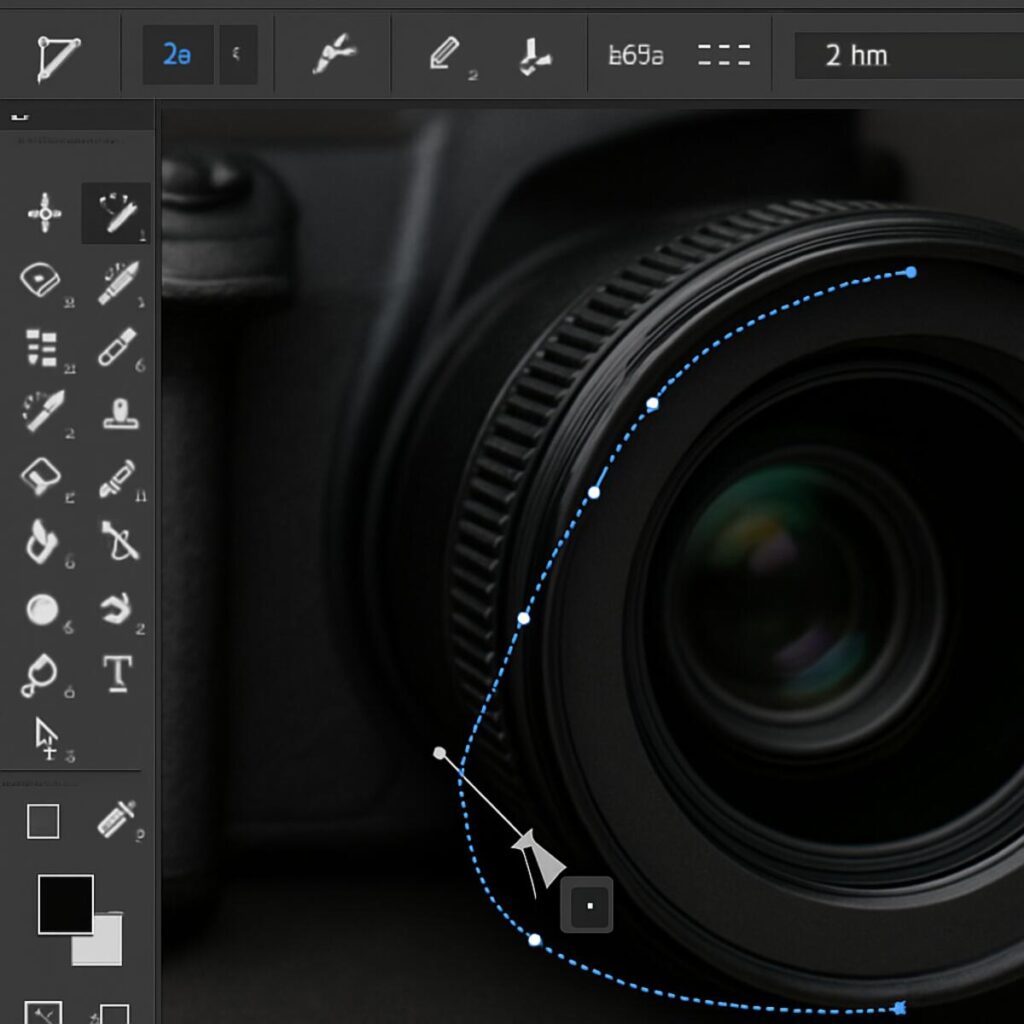
While modern software features various AI-powered “magic wands” and “object selection” tools, professional editors still rely heavily on manual techniques. If you want a flawless edge, you must master pen tool techniques for accurate selection.
Here is why the Pen Tool remains the industry standard:
- Precision Control: The Pen Tool creates vector paths using anchor points and bezier curves. This allows the editor to hug the exact contour of a product, sweeping smoothly around curves and snapping sharply to corners.
- Scalability: The benefits of hand-drawn vector paths include infinite scalability. Because the path is mathematically calculated rather than pixel-based, the selection remains razor-sharp whether the image is viewed on a mobile phone or printed on a massive billboard.
- No Bleed: Automated tools often struggle with low-contrast areas (e.g., a white shirt on a light grey background), causing the background color to “bleed” into the product. The Pen Tool eliminates this.
Essential Software Techniques
When executing a flawless cutout, editors must adhere to Adobe Photoshop selection tool best practices. This means zooming in to at least 300% to ensure the path is drawn just one or two pixels inside the object’s edge. This technique is crucial for fixing jagged edges in product photos, ensuring the final image looks natural and smooth rather than pixelated and harsh.
Furthermore, professionals always utilize non-destructive photo editing techniques. Instead of permanently deleting the background pixels, a high-quality editor will apply the clipping path as a Layer Mask. This hides the background rather than destroying it, allowing the client to adjust the edge later if necessary without having to start from scratch.
Chapter 3: Complex Cutouts and Specialized Industry Techniques
Not all products are created equal. A sleek smartphone is relatively easy to cut out; a furry sweater or a translucent glass bottle requires an entirely different approach.
Hard Edges vs. Soft Edges
One of the most common questions in the editing world revolves around clipping path vs image masking differences.
- Clipping Path: Best used for objects with hard, smooth, and defined edges. Think electronics, furniture, books, and boxed goods.
- Image Masking: Essential for subjects with soft, complex, or translucent edges. If you are editing a model with flowing hair, a fluffy pet product, or a sheer fabric, a vector clipping path will make the edges look unnatural and plastic-like. Image masking utilizes advanced channel selections, background eraser tools, and color range selections to separate fine details (like individual strands of hair) from the background.
Fashion Apparel and the Invisible Model
In the fashion industry, presentation is paramount. Clothing looks best when it holds its natural shape, which is why brands use mannequins. However, showing a plastic mannequin in a final product shot can be distracting and cheapen the brand’s look.
The solution is the ghost mannequin effect for fashion apparel (also known as the neck-joint effect). This is a highly specialized editing process where the editor combines two photos: one of the garment on a mannequin, and one of the garment inside-out (showing the inner neck/back). The editor meticulously stitches these images together, removing the mannequin entirely and creating the illusion of an invisible person wearing the clothes.
The Intricacies of Jewelry Post-Production
Perhaps the most challenging and specialized form of product editing is the high-end jewelry retouching workflow. Jewelry photography is notoriously difficult because metals and gemstones reflect everything in the room, including the camera, the photographer, and the lighting equipment.
A standard jewelry retouching process involves:
- Multiple Clipping Paths: Create separate paths for the stones, prongs, and metal bands.
- Color Correction: Ensuring gold looks rich and diamonds look brilliantly clear, rather than dull or yellowed.
- Reflection Removal: Painting over harsh studio reflections to create smooth, luxurious metal gradients.
- Shadow Creation: Adding a natural drop shadow or reflection to ground the piece and give it a premium feel.
Chapter 4: The Business of Photo Editing
As an e-commerce business scales, handling image editing in-house quickly becomes a bottleneck. A photographer or business owner’s time is better spent shooting new products, marketing, or strategizing, rather than spending 15 minutes cutting out a single image. This drives the necessity of outsourcing bulk photo editing for e-commerce.
Understanding Pricing Models
When business owners decide to outsource, the first question is usually: what is the cost of manual clipping services? Pricing in the photo editing industry is highly dependent on complexity and volume.
- Simple Images: (e.g., a ball, a book, a smartphone) generally cost between $0.39 to $0.80 per image.
- Medium Complexity: (e.g., shoes with laces, simple garments) range from $1.00 to $2.50 per image.
- High Complexity/Super Complex: (e.g., bicycles, intricate jewelry, chain-link fences) can cost anywhere from $3.00 to $10.00+ per image.
Time is Money
Another critical factor is the turnaround time for professional retouching services. In the fast-paced world of retail, missing a product launch because of delayed photos is unacceptable. Standard industry turnaround times are usually 24 hours, but top-tier providers offer expedited options (12 hours, 6 hours, or even less for smaller batches) to accommodate urgent client needs.
Ensuring Flawless Results
When handing over thousands of images, trust is paramount. Top agencies implement rigorous image post-production quality control standards. This usually involves a three-tier QA system:
- Primary Editor: Completes the initial clipping path or mask.
- QA Specialist: Checks the image at 300% zoom to ensure all paths are tight and no jagged edges remain.
- Shift Manager: Does a final review of the batch to ensure naming conventions, file formats, and specific client instructions were followed perfectly before delivery.
Chapter 5: How to Evaluate a Service Provider
Before we jump into the reviews, it is important to understand the criteria for choosing the best image-editing outsourcing partner. If you are vetting a company, look for the following:
- Free Trial: A reputable agency will always offer a free trial (usually 1-3 images) so you can test their quality and communication before committing.
- Data Security: Ensure they have strict NDA policies and secure FTP servers to prevent your unreleased product images from leaking to competitors.
- Scalability: Can they handle 50 images per day and 5,000 per day during your peak season?
- Customer Support: 24/7 support is vital, especially since many top editing houses are located in different time zones than their clients.
Chapter 6: Top Clipping Path Service Providers Reviewed
Now that we have established the technical requirements and business considerations, let us look at the best agencies in the market today. We have reviewed these providers based on edge accuracy, pricing, turnaround time, communication, and overall value.
1. Clipping Path Wise (Top Recommendation)
Taking the number one spot on our list is Clipping Path Wise. After extensive testing across various complexities—from simple consumer goods to highly complex jewelry cutouts—Clipping Path Wise consistently outperformed the competition, balancing premium quality with incredibly competitive pricing.
Why Clipping Path Wise Stands Out: What sets Clipping Path Wise apart from the myriad editing companies online is its unwavering commitment to manual editing. In an era where many companies secretly use automated AI tools to speed up their workflow (often resulting in subpar, bleeding edges), Clipping Path Wise guarantees 100% hand-drawn vector paths.
Core Services Offered:
- Premium Clipping Path: Flawless pen tool cutouts for all product types.
- Advanced Image Masking: Superior handling of hair, fur, and translucent materials.
- Ghost Mannequin Editing: Seamless neck joints and wrinkle removal for high-end fashion brands.
- Photo Retouching: Including high-end beauty, jewelry, and product cleanup.
- Shadow & Reflection Creation: Adding natural drop shadows to ground products for e-commerce.
The Clipping Path Wise Workflow: When you submit a batch of photos to Clipping Path Wise, their workflow is a masterclass in efficiency. They employ strict image post-production quality control standards, ensuring every file passes through a multi-tiered QA process. They are particularly adept at fixing jagged edges in product photos; even when given low-resolution test images, their editors managed to create smooth, believable curves.
Pricing and Turnaround: Clipping Path Wise offers highly transparent pricing. Simple clipping paths start at highly competitive rates, making them the ideal choice for outsourcing bulk e-commerce photo editing. They also boast a standard 12 to 24-hour turnaround time, with rush options available for those critical, last-minute product launches.
Pros:
- Exceptional pen-tool accuracy; zero reliance on automated shortcuts.
- Highly responsive 24/7 customer service.
- Ability to scale effortlessly for large e-commerce catalogs.
- Strict adherence to non-destructive editing practices.
- Offers a robust free trial to prove their quality.
Cons:
- Because they rely strictly on human editors, they may not be the cheapest option for clients seeking ultra-cheap, automated, low-quality edits—but for professional e-commerce, the investment is absolutely worth it.
2. Path, Fix & Retouch (Fictionalized/Comparative High-End Boutique)
Coming in second is Path, Fix & Retouch, a boutique agency known for their highly specialized commercial retouching. While Clipping Path Wise is our top pick for all-around e-commerce excellence and scalability, Path, Fix & Retouch carves out a niche in editorial and magazine-style retouching.
Core Strengths: Their team excels in the high-end jewelry retouching workflow. If you have macro photography of diamonds where every single facet needs to be reconstructed and color-graded, this agency handles it beautifully. They are also experts in complex beauty retouching, utilizing advanced frequency separation techniques to flawless skin while retaining texture.
The Drawbacks: The primary issues with boutique agencies like this are cost and speed. What is the cost of manual clipping services here? It is significantly higher than industry averages. Because they focus heavily on editorial work, they are not the best fit for standard e-commerce bulk orders. Furthermore, their turnaround time for professional retouching services can stretch to 48-72 hours during their busy seasons.
Pros:
- World-class editorial retouching.
- Exceptional jewelry and watch editing.
Cons:
- High price point.
- Slower turnaround times.
- Not ideal for bulk Amazon or Shopify product catalogs.
3. Global E-commerce Edits (The Bulk Specialist)
If your sole focus is pushing massive volume, Global E-commerce Edits is a strong contender. They are built entirely around outsourcing bulk photo editing for e-commerce.
Core Strengths: This provider shines when a client drops a server link with 10,000 images that need basic background removal by the next morning. They have a massive team of junior editors working in shifts around the clock. They are well-versed in marketplace requirements, so if you just need to know how to create transparent backgrounds for Amazon at scale, they have the infrastructure to deliver.
The Drawbacks: When prioritizing extreme volume and speed, quality control occasionally suffers. During our tests, we found occasional lapses in Adobe Photoshop selection tool best practices. While they delivered quickly, some complex images (like bicycles or plants) featured minor errors, such as missed inner loops (the spaces between handles or spokes) or slightly jagged edges where editors rushed through curves.
Pros:
- Can handle incredibly large volumes.
- Very fast delivery times.
- Cost-effective for massive catalogs.
Cons:
- Quality can be inconsistent on complex items.
- Requires more QA on the client side.
4. Pixel Perfect Cutouts (The Graphic Design Partner)
Pixel Perfect Cutouts caters heavily to marketing agencies and freelance graphic designers. Rather than just focusing on e-commerce product photos, they specialize in preparing assets for larger graphic design compositions.
Core Strengths: They are fantastic at clipping path vs image masking differences. If a graphic designer needs a model with frizzy hair isolated so it can be placed into a complex digital composite, Pixel Perfect Cutouts delivers incredibly precise alpha-channel masks. They also strictly utilize non-destructive photo editing techniques, returning PSD files with meticulously organized layer masks and perfectly named paths, which saves designers hours of prep work.
The Drawbacks: Their pricing structure can be confusing, often charging by the hour rather than a flat rate per image, which makes budgeting difficult for standard e-commerce store owners.
Pros:
- Excellent masking for hair and complex elements.
- Files are beautifully organized for designers.
- Great understanding of commercial composition.
Cons:
- Hourly pricing models can be unpredictable.
- Geared more toward agencies than direct-to-consumer brands.
5. Speedy Path Studio (The Rush Job Experts)
Sometimes, you just need it done yesterday. Speedy Path Studio has built its entire reputation on aggressive turnaround times.
Core Strengths: They offer guaranteed 4-hour and 8-hour delivery windows for small to medium batches. If a photographer realizes they forgot to edit a hero image for a client’s website launch happening tomorrow, Speedy Path Studio is the emergency button. They are particularly proficient at standard background removal and basic ghost mannequin effect for fashion apparel.
The Drawbacks: To achieve these speeds, you pay a steep premium. Rush fees can double or triple the standard cost per image. Furthermore, while their speed is impressive, they sometimes rely on automated selection tools to beat the clock, which means you lose the benefits of hand-drawn vector paths for particularly tricky shapes.
Pros:
- Unbeatable rush delivery options.
- Lifesaver for tight deadlines.
Cons:
- Very expensive rush fees.
- Occasional reliance on automated tools reduces edge quality.
Chapter 7: The Future of Image Editing
As technology evolves, the conversation often shifts to AI. Will Artificial Intelligence replace manual clipping path services?
While AI background removal tools have improved significantly, they remain fundamentally flawed by professional commercial standards. AI struggles with low contrast (a white mug on a white table), complex transparencies (a glass of water), and brand-specific subjective choices (knowing exactly where a shadow should fall based on a brand’s style guide).
Therefore, mastering the art of removing image backgrounds professionally remains a human-driven art form. The synergy of the future will involve AI handling basic sorting and color correction, while human experts at agencies like Clipping Path Wise continue to wield the pen tool to guarantee the pixel-perfect edges that high-end brands demand.
Conclusion: Making the Right Choice for Your Brand
High-quality images are the lifeblood of online sales. A poorly edited photo with choppy edges and terrible lighting immediately erodes consumer trust, making your product look cheap. Conversely, beautifully edited photos with clean paths, accurate colors, and realistic shadows elevate your brand and justify premium pricing.
When choosing the best image-editing outsourcing partner, you must weigh your specific needs for volume, complexity, speed, and budget.
If you want the absolute best balance of premium quality, flawless pen tool techniques for accurate selection, rigorous quality control, and scalable e-commerce pricing, Clipping Path Wise is our undisputed top recommendation. Their commitment to manual, precise editing ensures that your products will always look their absolute best, allowing you to focus on what you do best: growing your business.
Do not let subpar imagery hold your brand back. Take advantage of a free trial with a top-tier provider today, and see the difference a professional clipping path can make to your bottom line.
