


Every real estate agent knows the feeling: you’re in the middle of showing a home, and your phone buzzes with a new lead. You can’t answer, and you hope they leave a message. With industry data suggesting that responding within five minutes dramatically increases conversion, waiting even an hour means that potential client has likely already moved on. Find the BEST AI VOICE AGENTS FOR REAL ESTATE.
What if you could guarantee that never happens again? Imagine a virtual assistant who not only answers that call instantly but does so intelligently, 24/7. This is the core promise of an AI voice agent—a smart tool that acts as your personal receptionist who never sleeps, ensuring no opportunity is ever missed. It’s like having an expert assistant dedicated solely to that crucial first contact.
Unlike a simple voicemail, these specialized agents have real conversations. They can ask a caller if they’re already working with an agent, understand their budget, and even schedule a follow-up call directly on your calendar. This isn’t just about call forwarding; it’s about fundamentally automating real estate client communication to give every new person an immediate and professional experience.
AI voice agents for real estate transform missed calls into powerful real estate lead nurturing opportunities. They save time, capture more clients, and ultimately, help you focus on what you do best: closing deals.
What Is an AI Voice Agent? (Hint: It’s Not Siri or Alexa)
You’ve probably asked Siri for the weather or told Alexa to play a song. They’re great for simple, one-off commands. An AI voice agent, however, is fundamentally different. Think of it less like a trivia machine and more like a dedicated, super-powered receptionist who works exclusively for your real estate business. Its entire job is to have a productive conversation with a clear goal, like scheduling a viewing or understanding if a caller is a serious buyer.
In real estate, this AI conversational assistant acts as your front line. When a potential buyer calls your number from a “For Sale” sign, the AI answers instantly and naturally. It can ask key qualifying questions like, “Are you already working with an agent?” or “Have you been pre-approved for a loan?” This is a massive step up from typical real estate chatbot alternatives that often feel robotic and limited.
The true purpose of an AI agent is to handle that initial screening so you don’t have to. After the call, it delivers a perfectly organized summary with all the crucial details. This frees you to focus on showing homes and closing deals, confident that no opportunity is ever missed. This immediate, intelligent response is exactly how agents can now capture and qualify every single lead, 24/7.
How AI Instantly Captures and Qualifies Every Single Lead, 24/7
In real estate, there’s a golden rule for online inquiries: the first agent to respond often gets the client. This race against the clock is known as “speed-to-lead,” and it’s a game-changer. When a potential buyer requests information on a listing at 10 PM, they don’t want to wait until morning. An AI voice agent eliminates that wait entirely, engaging every single person instantly and professionally, no matter the time of day. This ensures you are always first in line.
Answering quickly is only half the battle, though. The next step is lead qualification—the crucial process of figuring out if a caller is just a curious browser or a serious, ready-to-act buyer. Instead of you spending hours on the phone filtering these calls, the AI acts as your 24/7 receptionist. It has a natural, two-way conversation to gather the information needed to determine how “hot” a lead is.
To do this, the AI asks the same smart questions any top-tier assistant would, such as:
- Are you already working with an agent?
- What is your approximate budget?
- How soon are you looking to move?
- Are you pre-approved for a mortgage?
The result is powerful. After the call, the AI delivers a neat summary that flags the most promising leads. You immediately know who is pre-approved and looking to buy this month versus who is just starting their search. This allows you to focus your valuable time on the clients who are most likely to convert, all while ensuring no opportunity ever slips through the cracks.
What Does an AI-Powered Conversation Actually Sound Like?
It’s one thing to talk about an AI having a conversation, but it’s another to hear it in action. Far from the robotic voice you might expect, modern AI voice agents sound remarkably natural. They are designed to manage common property inquiries with a friendly and professional tone, making them excellent real estate chatbot alternatives for phone calls. The goal isn’t to fool anyone, but to provide immediate, helpful service when a human can’t.
Imagine a potential buyer calls the number on your yard sign. The conversation might go something like this:
AI Agent: “Thank you for calling about the property on Elm Street. To best assist you, are you currently working with a real estate agent?”
Caller: “No, I’m just starting to look.”
AI Agent: “Wonderful. The agent, Sarah, is with a client right now but would love to follow up. Is it okay if she sends you a text in the next 15 minutes?”
This simple, scripted flow handles the initial contact perfectly, capturing the lead’s information and setting a clear expectation for a callback from the human agent. But what happens if the caller asks a complex question the AI wasn’t trained for, like, “What are the zoning regulations for building a new garage?”
That’s where the system’s most important feature comes in: the human handoff. The AI is programmed to recognize when it’s out of its depth. Instead of giving a wrong answer, it will say something like, “That’s an excellent question for the agent. I’ve made a note of it for them to answer when they connect with you.” It then seamlessly passes the detailed notes to the agent. This ensures complex issues are always handled by an expert, showing precisely how AI voice assistants work for realtors—as a powerful assistant, not a replacement.
The 3 Core Benefits: More Time, More Deals, and Happier Clients
A real estate agent’s most limited resource isn’t market knowledge; it’s time. By handling the repetitive front-line calls—the quick questions about availability, the basic property details, and scheduling inquiries—an AI voice agent acts as a tireless gatekeeper. Instead of being interrupted by a dozen minor calls a day, agents are only looped in for qualified, high-intent conversations. For many, this simple act of automating real estate client communication frees up five to ten hours every single week, time that can be reinvested into negotiating offers and closing deals.
That reclaimed time is valuable, but the most direct return on investment comes from leads you otherwise would have missed. In a competitive market, the first agent to respond often wins the client. When a potential buyer calls your sign at 9 p.m. on a Friday, an AI agent ensures that lead is captured, qualified, and scheduled for a follow-up. Just one commission from a single lead secured after-hours can pay for the service for an entire year, demonstrating the clear financial power of real estate lead nurturing automation.
Beyond the immediate financial gains, consider the client experience. In an industry built on relationships, providing instant, professional responses 24/7 sets a powerful first impression. Instead of a cold voicemail box or a frustrating phone tree, potential clients get immediate, helpful interaction that makes them feel heard and prioritized. This elevated service is a key differentiator, building a brand reputation for efficiency and care long before you ever meet in person.
These tools work together to give you more time, help you secure more deals, and build a reputation for stellar service. The challenge shifts from why you would want one to figuring out which one best fits your needs.
How to Choose the Right AI Voice Agent: 4 Key Factors to Consider
The “best” tool for a bustling 10-person brokerage isn’t always the right fit for a solo agent. Your specific goals and workflow are what matter most when you compare AI real estate assistants. Before you commit, thinking through a few key questions will ensure you get a service that truly helps your business without paying for features you don’t need.
To find your perfect match, ask yourself these four questions:
- Solo Agent or Team? Do all calls go to you, or do you need the AI to intelligently route leads to different agents on your team?
- How Does It Connect? Does the AI automatically update your digital contact list (often called a CRM) after a call, or will you have to copy and paste the information yourself?
- Voice Only or Text, Too? Do you just need a voice to answer the phone, or do you also want the system to send automated text messages for instant follow-up?
- What’s the Pricing Model? Would you prefer a predictable flat fee each month (subscription) or pay only for each qualified lead the AI captures (pay-per-lead)?
That last point on pricing is especially important when choosing a real estate AI voice bot. A subscription offers a fixed cost that’s easy to budget for, no matter how many calls you get. In contrast, a pay-per-lead model can be more cost-effective if your call volume is low or unpredictable. Each has its advantages, and understanding the difference is crucial for making a smart investment.
With this framework in mind, we can examine some of the top options on the market today.
Top Tool Review 1: Best for Solo Agents on the Go
For the individual agent who is their own boss, receptionist, and marketing department, speed is everything. When you’re the only person responsible for answering calls, any missed opportunity can feel like a lost commission. This is exactly where some of the best AI voice agents for real estate shine, acting as a dedicated partner designed specifically for the solo agent’s hustle. They focus on one thing: capturing a lead’s critical information and getting it to you instantly, wherever you are.
The magic isn’t hidden in a complex computer program; it’s delivered right to the device you already use most—your smartphone. After the AI has a conversation with a new caller, it doesn’t just send you an email you might miss. Instead, a simple, clear notification pops up on your screen. This mobile-first approach means you get an immediate summary of the conversation, including the caller’s name, the property they’re interested in, their budget, and their readiness to buy, all before you even finish your current meeting.
This method transforms a potential headache into a simple, actionable task. Think of it less like learning new software and more like getting a perfect, detailed text message from a hyper-efficient assistant. Because the information is pushed directly to you, you can see if a lead is hot and decide whether to call them back immediately or after your current appointment. For many, this simplicity is what makes for the top AI for real estate agents, as it requires almost no change to their daily workflow.
Ultimately, this type of 24/7 AI receptionist for realtors gives solo agents the power of a front desk without the overhead or complexity. It’s built for action, not administration. For teams and brokerages that need to route leads to multiple agents, however, a different set of features becomes critical.
Top Tool Review 2: Best for Teams and Brokerages
When a business grows from a single agent to a full team, the challenges multiply. It’s no longer just about answering the phone; it’s about getting the right opportunity to the right agent, instantly. For this, you need more than just a virtual receptionist—you need an air traffic controller. The best tools for teams excel at this kind of automated lead routing, acting as a smart dispatcher that ensures fairness and speed.
Instead of just taking a message, these platforms use AI for lead qualification in real estate to understand the caller’s needs first. For example, if a lead calls about a luxury condo downtown, the AI can instantly route them to your team’s downtown specialist. If that agent is busy, it can try the next agent on the list. This eliminates manual assignment and ensures every single lead is handled by the most qualified person available, dramatically improving your team’s chances of conversion.
Beyond just routing calls, these systems provide a crucial bird’s-eye view through a team performance dashboard. Think of it as a central scoreboard for your brokerage. At a glance, a manager can see who is responding the fastest, which leads have been followed up with, and how many appointments each agent has booked. This is a game-changer for accountability and helps you understand what’s working without having to chase down individual agents for updates. To truly compare AI real estate assistants, this team-level insight is a major advantage.
Top Tool Review 3: Best for All-in-One Text and Voice Nurturing
Some of the most valuable leads are the ones who aren’t ready to buy or sell today. But who has time to manually follow up with someone for six months? This is where an AI that can manage long-term relationships truly shines, turning “maybe later” into “let’s talk now.”
Instead of a single phone call, the best platforms for real estate lead nurturing automation use a mix of both voice calls and text messages to stay in touch. This strategy is often called an automated “drip campaign”—think of it as a slow, steady drip of helpful communication over weeks or months that keeps you top of mind without being pushy. It might send a text one month and schedule a brief, automated check-in call the next.
Imagine an AI conversational assistant for real estate leads that can sift through your old contacts. It could send a text to a lead from last year, asking if their moving plans have changed. If they respond with interest, the AI can have a quick conversation to re-qualify them and then loop you in. It’s like having an assistant dedicated to reviving your database, with all the new information automatically organized and ready for you.
This all-in-one approach transforms your collection of old leads from a digital graveyard into a living source of new opportunities.
“But Does It Sound Like a Robot?”—The Surprising Quality of Modern Voice AI
The first question on every agent’s mind is whether a voice AI will sound like a clumsy robot and scare away leads. We’ve all been trapped by frustrating, robotic phone menus. The good news is that today’s AI voice agents are a world away from the simple assistants on your phone. The technology has evolved from just speaking words to learning the rhythm and flow of a natural conversation, making it sound less like a machine and more like a trained receptionist.
The secret isn’t just a pleasant voice; it’s the ability to manage a real back-and-forth dialogue. These advanced systems are designed to listen, pause, and understand the intent behind a caller’s questions, making them excellent real estate chatbot alternatives for handling property inquiries. They can process hesitation, field an unexpected question, and maintain a conversational pace. The interaction is often so smooth that many callers complete a conversation without ever suspecting they weren’t speaking to a human.
This focus on quality ensures the AI provides a professional and helpful first impression, building trust with potential clients from the very first call.
How AI Syncs With Your Calendar and Contacts (Without the Headaches)
A great conversation with a potential client is only half the battle. The real work often begins after the call: scribbling down notes, typing contact details, and trying to find a time to meet. An AI voice agent truly becomes a game-changer by acting as a perfect digital assistant who handles all the tedious follow-up work for you.
Imagine your AI finishes a call with a new buyer who wants to see the house on Maple Street. Instead of you having to play phone tag, the AI can say, “Our agent is available tomorrow at 2 PM or 4 PM. Which works for you?” Once the caller confirms, the appointment instantly appears on your work calendar. This is the new reality of automating real estate client communication, turning a simple inquiry into a booked property viewing without you lifting a finger.

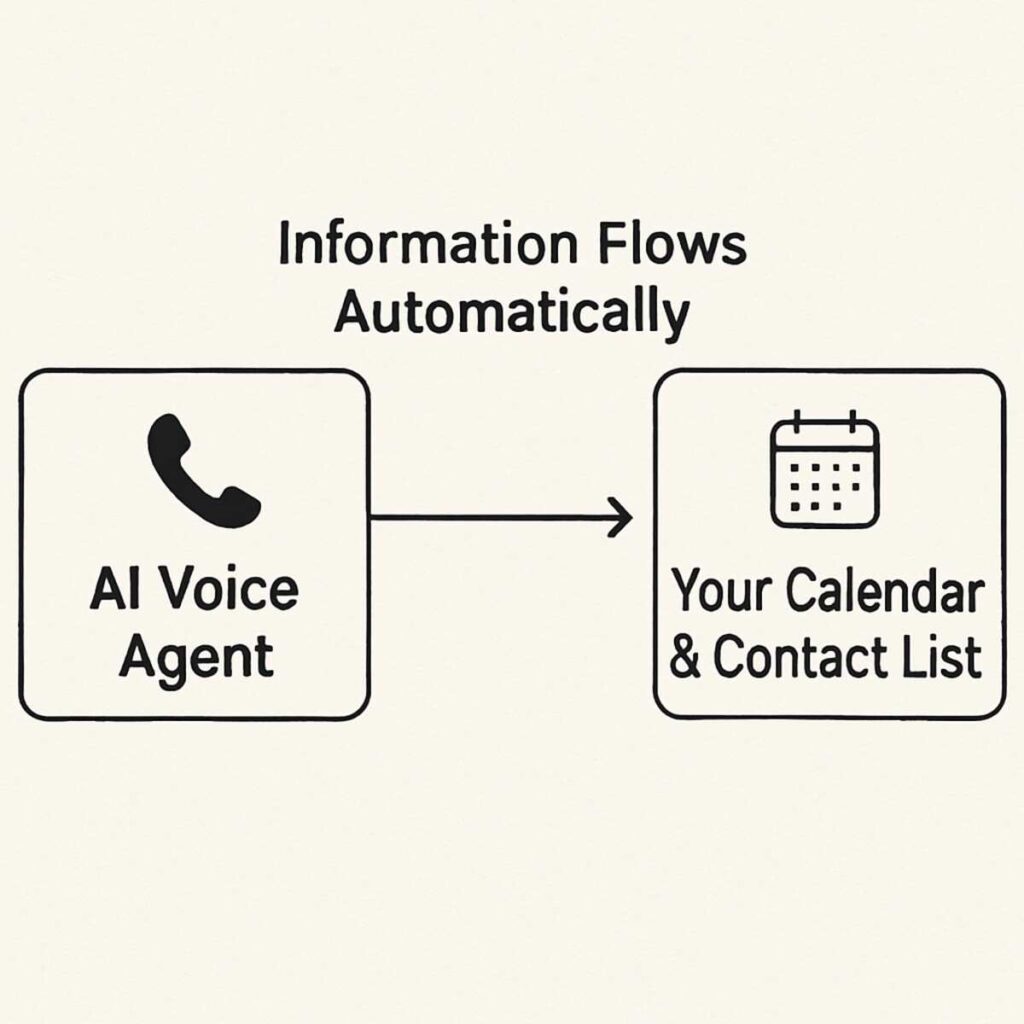
Beyond just scheduling, all the crucial details from the call are automatically captured. The caller’s name, phone number, budget, and a summary of their conversation are neatly organized and sent straight to your contact list—what many agents call a CRM. This means no more forgotten leads or messy notebooks. The information is there, accurate and waiting for you.
Beyond New Leads: Can AI Help With Property Management?
While an AI that never misses a new lead is powerful, its skills aren’t limited to just finding buyers. For agents who also handle rental properties, this same technology can act as an incredibly efficient assistant, streamlining the often-chaotic world of property management. It’s like having a dedicated 24/7 AI receptionist for realtors and property managers alike, capable of wearing multiple hats.
Imagine a frantic late-night call from a tenant. Instead of waking you up for a minor issue, the AI can instantly understand the difference between a burst pipe and a running toilet. It can be trained to recognize keywords for emergencies, immediately notifying you or an on-call plumber via text. For non-urgent requests, it simply logs the details in a report for you to review the next morning, ensuring nothing gets missed without disrupting your life.
This scheduling ability is also invaluable for the rental market. The voice AI for property management can field calls from prospective tenants, answer basic questions about the property, and ask pre-qualifying questions like their desired move-in date. Best of all, it can schedule property viewings right on the spot, filling your calendar with qualified applicants without you ever needing to pick up the phone.
The Price Tag: Is an AI Voice Agent Worth the Investment?
After hearing what these tools can do, the next logical question is always about the cost. While you might expect a high-tech price tag, the reality is often surprisingly affordable. Most AI voice agent pricing and reviews show two common models: a flat monthly subscription, similar to other business software, or a pay-per-use structure where you’re charged for each call or lead the agent handles. This flexibility makes it accessible for individual agents and large teams alike.
To understand the value, compare these tools to their human counterparts. Hiring even a part-time receptionist involves a salary, benefits, and training time—and they can’t be on call 24/7. An AI voice agent typically costs a small fraction of that monthly salary, requires no training on your part, and never takes a sick day or a vacation. It’s ready to work from the moment you turn it on.
The most powerful way to think about the price, however, isn’t about the monthly fee. It’s about the return on investment from a single saved deal. Imagine the AI costs a few hundred dollars a month. Now, consider the commission from just one sale you might have otherwise missed—that call that came in while you were in a showing or asleep. By capturing and qualifying that one lead, the AI has likely paid for itself for the entire year.
This transforms the decision when choosing a real estate AI voice bot. It stops being an expense and becomes a strategic investment in capturing every possible opportunity. The risk isn’t trying it; the real risk is the income you might be leaving on the table by not having it.
Your First Steps: How to Start Using AI in Your Business Today
The constant ringing of your phone no longer has to dictate your day. Before, a missed call might have been a lost lead. Now, you can see a clear path to automating real estate client communication, turning every inquiry into an opportunity, even when you’re in a meeting or showing a property. You’ve moved from reacting to your phone to being in control of your business.
Taking the first step is simpler than you might think. Instead of feeling overwhelmed, just run a small, low-risk experiment with this three-step plan:
- Identify Your Biggest Phone Bottleneck. Is it missed calls from your yard signs? After-hours website leads? Pinpoint the one area causing the most friction.
- Demo One Tool. Choose one of the best AI voice agents for real estate mentioned in this guide and sign up for a free trial or demo.
- Test It on One Lead Source. For one week, direct only that single source of leads (like your Zillow inquiries) to the AI agent and measure the results.
This journey isn’t about finding the top AI to replace you; it’s about finding a tool to amplify your skills. Think of this technology as a tireless assistant that handles the repetitive, time-sensitive tasks, freeing you to do what no machine can: build trust, negotiate deals, and guide clients to their new homes. You are still the expert; you just have superpowers now.