


Been invited to a game of Booray and don’t want to spend the night just nodding along? Or maybe you’ve heard friends mention this fast-paced card game and want to join the fun. This guide will break down the Booray card game rules into simple, easy-to-follow steps so you can play your first hand with confidence in about ten minutes. To know more, check out gamestopgiftbalance.com
At its core, Booray is a “trick-taking” game where players try to win each round, or “trick,” by playing the highest card. Originating in Louisiana, the game adds excitement by mixing in betting. Everyone antes up to create a central pot, and the player who captures the most tricks wins the cash. This guide will teach you the main objective—win tricks—and how to avoid the dreaded penalty of getting “boorayed” for failing to win even one.
The Goal & The Gear: What You Need to Play Booray
In Booray, your goal is to win the pot of chips or money in the center of the table. You do this by winning “tricks”—small, five-card battles that make up a full round of play. If you’ve ever played games like Spades or Hearts, the concept of trick-taking will feel familiar. If not, don’t worry; it’s easy to pick up.
This popular Cajun card game doesn’t require any special equipment. You can get a game started with just a few common items:
- A standard 52-card deck (jokers removed)
- 2 to 7 players (the game is often best with 4 to 6)
- Betting chips, coins, or cash for each player to use for the pot
Think of a “trick” as one quick round where each player plays a single card from their hand. The player who throws down the highest-ranking card wins that collection of cards, which is the trick. Winning more of these tricks than anyone else at the table is how you win the entire pot.
Starting a Round: The Ante and The Deal
Every round of Booray kicks off with a bet. Before any cards are even shuffled, each player must contribute an equal, predetermined amount into the center of the table. This initial payment is called the ante. All the antes are then gathered together to create the pot—the prize that everyone will be fighting to win. This is a core Booray betting rule, as it ensures there’s always something at stake.
Once the pot is established, the designated dealer shuffles the deck and distributes the cards. Starting with the player to their immediate left and moving clockwise, the dealer gives each person five cards. You can pick up and look at your hand, but you’ll have a chance to improve it in a moment.
What is the Trump Suit? Your Secret Weapon for the Round
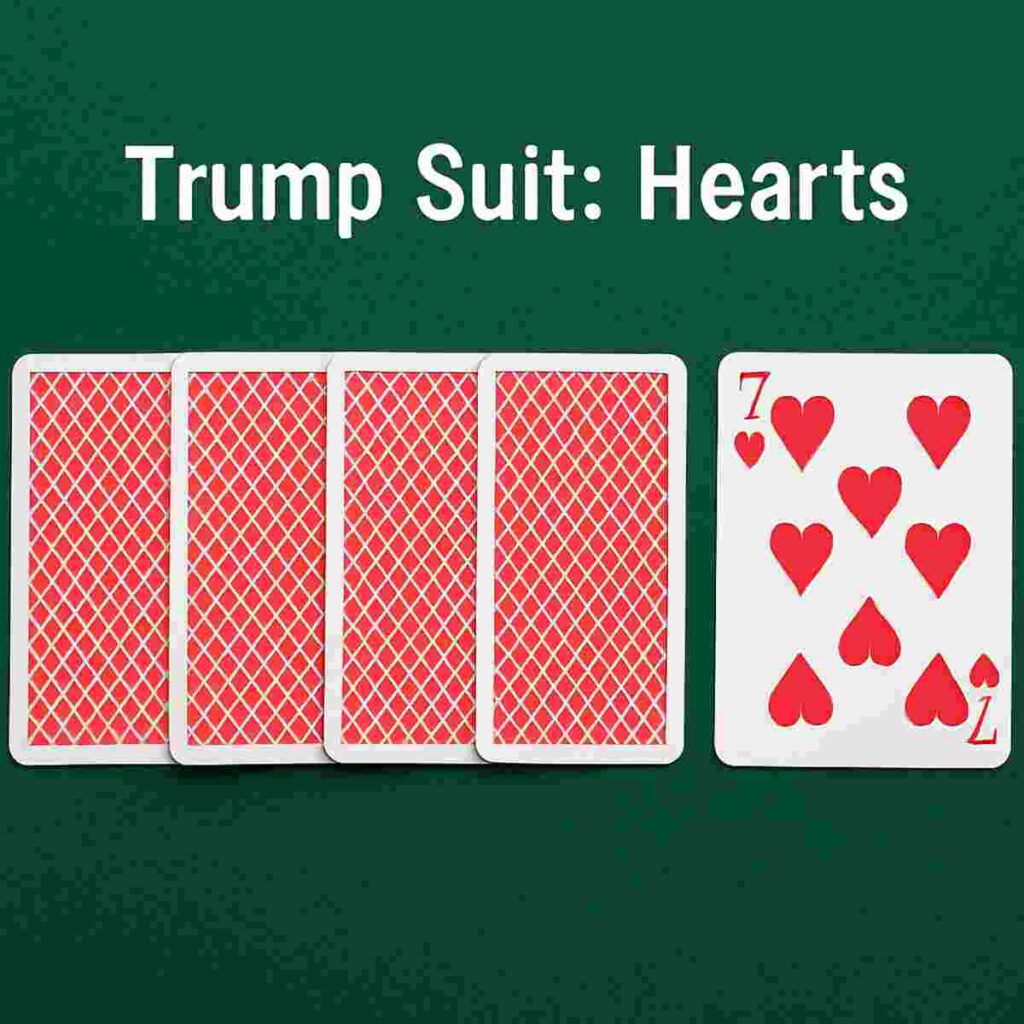
After the cards are dealt, the dealer takes the next card from the top of the deck and flips it face-up for everyone to see. The suit of this single card—be it Hearts, Diamonds, Clubs, or Spades—becomes the trump suit for the entire round. Think of the trump suit as having a temporary superpower; any card from this suit is now more powerful than any card from the other three suits. If the dealer flips over the 7 of Hearts, then Hearts are trump for that hand.
This special status completely changes the value of your cards. A trump card can win a trick even if its face value is low. For example, let’s say Hearts are trump. If one player leads with the Ace of Spades (the highest-ranking Spade), and you play the 2 of Hearts, you win the trick. Your lowly 2 of Hearts “trumps” their powerful Ace because its suit has the superpower for that round.
To Swap or Not to Swap: The “Draw” Phase Explained
Now that you know the trump suit, take a hard look at the five cards in your hand. Do they give you a good shot at winning tricks? This is your one and only chance to improve your hand before the action starts.
Starting with the player to the dealer’s left, each person has a choice. You can draw new cards by first placing the ones you don’t want face-down in a discard pile, then taking the same number of new cards from the top of the deck. For example, if Hearts are trump and you have no Hearts, you might discard three non-Heart cards in the hopes of drawing some. You can swap anywhere from one to all five of your cards.
Alternatively, if you were dealt a strong hand right from the start (like several high-ranking trump cards), you can choose not to exchange any cards at all. This is called standing pat. Once every player has had their turn to either draw or stand pat, no more cards can be exchanged.
How a Trick Works: The Core Rule of “Following Suit”
With everyone’s hand finalized, the real game begins. The player to the dealer’s left starts the very first trick by choosing any card from their hand and playing it face-up in the center of the table. This is called the lead card, and the suit of that card sets the rule for everyone else in the trick.
The most important rule is following suit. This means that if the lead card is a Spade, you must play a Spade if you have one in your hand. It doesn’t matter if it’s high or low; if you hold a card of the lead suit, you are required to play it. For instance, if the lead card is the 9 of Spades and you have the 3 of Spades, you must play your 3. Assuming no trump is played, the player who puts down the highest-ranking Spade will win the trick.
Only when you don’t have any cards of the suit that was led are you free to play any card from your hand. You could play a low card from another suit to get rid of it, or you could seize the opportunity to play one of your powerful trump cards.
When to Play Trump: Winning Tricks Against the Lead Suit
When you can’t follow suit, the trump suit shows its true power. If you don’t have any cards of the lead suit, you are allowed to play a trump card instead. This is called “trumping the trick,” and it’s your best tool for winning a round where you otherwise couldn’t compete. Playing even the lowest-ranking trump card instantly puts you in the lead to win that trick.
To see this in action, imagine the trump suit is Diamonds.
- Player 1 leads with the King of Spades.
- It’s your turn, and you have no Spades. You do, however, have the 3 of Diamonds.
- You play your 3 of Diamonds.
Even though a King normally beats a 3, your 3 of Diamonds now beats the King of Spades because it is from the trump suit. Unless another player after you plays a higher Diamond (like the 4 of Diamonds or better), you will win this trick. The trump suit is the ultimate tie-breaker.
This presents a crucial choice every time you can’t follow suit. You can either play a trump card to try and win the trick, or you can “slough off” by playing a useless low card from a different, non-trump suit. Choosing when to use your valuable trump cards is the heart of good strategy. Wasting them too early might cost you later, but not using them could mean failing to win any tricks at all.
How to Win the Pot (And Avoid the Dreaded Penalty)
After the last trick has been won, the round ends. Everyone simply counts the number of tricks they collected. The player with the most tricks wins the entire pot. If two or more players tie for the most tricks, they split the pot evenly.
Now for the rule that gives the game its name. There’s a severe penalty for any player who fails to win a single trick. This is called getting “boorayed” (pronounced boo-RAY). If this happens, you must personally match the amount that was just won from the pot. For instance, if the pot had $10 and you won zero tricks, you have to put $10 into the new pot for the next hand. This penalty is how pots can get very big, very fast.
The penalty clarifies the real objective of Booray. You have two goals in every hand. First, and most importantly, you must win at least one trick to avoid the costly penalty. Only after you’ve safely won a trick can you shift your focus to winning more tricks than anyone else. This tension between playing to win and playing to stay safe is what makes the game so thrilling.
A Full Hand of Booray: Let’s Play a Round Together
Let’s walk through a sample hand to see the rules in action. Imagine you’re playing with two friends, Alice and Bob. Everyone antes $1, creating a $3 pot. The dealer gives each of you five cards and then flips over the Ace of Spades. For this round, Spades are trump. After looking at your hand, you decide to discard two cards and draw two new ones.
Alice, who is first to act, leads the trick by playing the Queen of Hearts. Bob looks at his hand and, having a Heart, must follow suit by playing the 3 of Hearts. It’s now your turn. You don’t have any Hearts, so you’re free to play any card. You decide to play the 2 of Spades. Even though your 2 is a low card, it beats both the Queen and the 3 because it’s from the trump suit. You win the trick.
Now that you’ve won a trick, you are safe from the booray penalty. You also get to lead the next trick. The hand continues like this for four more tricks, with players following suit when they can and using trump cards to steal tricks when they can’t.
Once the last card is played, everyone counts their tricks. You’ve won a total of three tricks, Bob won two, but poor Alice couldn’t win a single one. Because you won the most tricks, you take the entire $3 pot. Congratulations!
The round isn’t quite over, however. Since Alice won zero tricks, she has been “boorayed.” She must now pay a penalty by matching the amount that was just in the pot. She puts $3 into the center of the table, creating a fresh pot for the next hand. This is how a simple game can quickly build excitement and high stakes.
3 Simple Strategies for Your First Game of Booray
Making smart decisions with the cards you’re dealt is what separates a lucky win from a consistent one. For beginners, focusing on these fundamentals is key:
- Your #1 Goal: Win ONE Trick. Before you even think about winning the pot, focus on taking a single trick. This makes you safe from the booray penalty.
- Don’t Waste High Trumps Early. A high trump card (like an Ace or King) is almost a guaranteed trick. Don’t use it on a trick you could win with a lower card.
- Know When a Hand is Weak. If you’re dealt a hand with no trump cards and no high cards, your goal shifts. Don’t try to win the pot; just find an opportunity to snatch one trick and survive.
That first point cannot be overstated. Avoiding the penalty is often a bigger victory than winning a small pot. If you see a clear chance to win a trick—even if it means using a decent card—it’s usually worth taking just to get on the board and secure your safety.
Ultimately, Booray is a game of managing resources. If you have a great hand, be aggressive. If your hand is weak, your goal isn’t to win; it’s to live to play the next round without paying a penalty. Playing smart is more important than playing strong.
Booray vs. Spades: How is Booray Different?
If you’ve played other trick-taking games like Spades or Hearts, you’ll recognize the core of Booray right away. However, there are key differences. In Spades, the trump suit is always Spades. Booray keeps you on your toes because the trump suit changes every single hand, determined by a random card flip.
Another key difference is the draw. Before play starts, Booray gives you a chance to discard cards and draw new ones, a strategic moment of risk and reward that doesn’t exist in Spades. Furthermore, while Spades is usually a team game, Booray is a true free-for-all where you play only for yourself.
Perhaps the biggest contrast is the risk. In Spades, falling short on your bid just hurts your score. In Booray, the stakes are much more immediate. You’re often playing for cash, and failing to win even one trick means you get “boorayed” and must pay a costly penalty. This dynamic makes Booray an exciting alternative, where surviving the round is just as important as winning it.
Answering Your Top Questions: Ace Ranking, Ties, and House Rules
As you play, a few specific situations will inevitably pop up. Here are the standard rules for Booray’s most frequent questions:
- Q: Is the Ace high or low in Booray?
- A: Ace is always the highest-ranking card. It beats the King, Queen, and so on.
- Q: What happens if two or more players tie for the most tricks?
- A: They split the pot evenly. (In some variations, the pot carries over to the next hand).
You may find that the group you’re playing with does things a little differently. Many circles play with “house rules,” which are minor booray card game variations agreed upon by the players. These often change specific booray betting rules, like the penalty amount or what happens in a tie.
Because of this, the most important question to ask before playing with a new group is, “Are there any house rules I should know about?” This ensures everyone is on the same page and keeps the game running smoothly.
Your Booray Quick-Reference Guide
To lock in the rules for your first game, use this quick cheat sheet.
How to Play Booray: The Round Step-by-Step
- Ante Up: Every player pays the ante into the pot.
- Deal: Each player receives five cards.
- Reveal Trump: The dealer flips a card to set the trump suit for the round.
- Draw: Players can discard any number of cards and draw replacements.
- Play Tricks: Five tricks are played, with players following suit when possible.
- Payout: Count the tricks. The player with the most wins the pot, while anyone who won zero tricks must pay a penalty.
You now have the knowledge and confidence to sit down at the table, play your hand, and have a great time. The goal isn’t to remember every rule perfectly on your first try, but to take that first trick and feel the momentum of the game. Now go join the fun.