


Have you ever been playing a video game and run up against a knee-high fence that your super-powered character, for some reason, can’t climb? It’s a frustrating moment that breaks the illusion. We’ve all been stopped by these “invisible walls,” forced down a single path when we can see a dozen other ways to go. A whole category of games was built to fix this, asking a simple but powerful question: what if you could go anywhere? To know more, check out ufabet เว็บตรง
These are parkour games, and they turn the entire world into your personal playground. To understand the core concept, think of the most thrilling chase scene from an action movie—the hero leaping between rooftops, sliding under pipes, and scrambling up walls without ever breaking stride. Instead of just watching, these games put you in control, making that freedom of movement the main event. This is what a parkour game is: an experience where the environment is not a limitation, but an opportunity.
The real goal isn’t just getting from point A to B; it’s about finding a sense of “flow.” This feels like linking your moves together into one seamless, unbroken chain. A perfectly timed jump might land you in a slide, which you then use to launch yourself onto a wall for a brief run to the next ledge. In these games with advanced movement systems, obstacles aren’t barriers—they’re invitations to express your creativity and skill.
This guide will explore the most iconic examples of parkour games, explain what makes each one unique, and give you the tools to find the perfect title to start your journey. It’s time to discover the games that turned movement into an art form.
How Parkour Games Are Different from Just “Jumping”
On the surface, many popular games seem to have parkour. Think of a title like Assassin’s Creed, where holding a single button lets your character automatically scale a massive cathedral. While it looks spectacular, the game is doing most of the work for you; you’re more of a director than an athlete. It’s a guided tour of movement, designed to get you from the ground to the roof with minimal fuss.
A true parkour game, however, hands the controls—and the challenge—back to you. Instead of an “auto-climb” button, you are responsible for every action. You have to judge the distance to the next rooftop, time your jump perfectly, and decide whether to grab a ledge or roll to absorb the impact. It feels less like watching a stunt and more like learning a physical skill, making every successful leap feel like a personal victory.
This is where the magic happens. When you begin to master these controls, you can chain moves together without ever stopping. A desperate jump leads into a slide under a security gate, which flows directly into a run along a wall to the next platform. This feeling of uninterrupted, graceful momentum is what players call “flow.” It transforms the simple act of getting from A to B into a creative and exhilarating performance, where the journey is the entire point.
The Two Flavors of Parkour Games: Automated Fun vs. Skillful Mastery
Now that you understand the goal is “flow,” it helps to know that parkour games generally offer it in two distinct flavors. The first is the “arcade” style, where the focus is on immediate, cinematic fun. Think of it as an interactive action movie. With simple, often single-button controls, your character automatically performs spectacular feats of agility. This approach lets you feel like a superhero from the moment you pick up the controller, emphasizing empowerment and the thrill of looking cool with minimal effort.
In contrast, the “simulator” style treats movement as both a puzzle to be solved and a skill to be mastered. These games hand you the tools—like jumping, sliding, and wall-running—but it’s entirely up to you to combine them perfectly. Failing a jump isn’t a punishment; it’s feedback teaching you about timing and distance. For players searching for a deep challenge, this is the core appeal. The satisfaction comes not from watching a cool stunt, but from finally executing a perfect sequence you’ve practiced over and over.
Your preference depends on what you’re looking for. Do you want to feel powerful instantly, or earn that power through dedicated practice? While both styles create incredible moments, one particular game almost single-handedly defined the skill-based approach. Its unique design became the gold standard, influencing a whole generation of games that tried to capture its unique and satisfying magic.
The Unmissable Classic: Why Mirror’s Edge Is the Blueprint for Parkour Games
That game is 2008’s Mirror’s Edge. Dropping players into a pristine, futuristic city, it dared to make movement the entire point of the experience. It wasn’t about fighting enemies; it was about the thrill of the chase and the freedom of the path ahead, turning the city itself into a giant, exhilarating puzzle.
What truly set it apart, and what still feels revolutionary today, was its perspective. Instead of watching a character from behind, you see the world directly through the hero’s eyes. This first-person view makes every action feel immediate and intense. You don’t just see your character jump; you feel the rush of wind, see your own hands reaching for a ledge, and get a genuine sense of height when you glance down. It was one of the first truly great first-person movement games, making you feel the impact of every step.
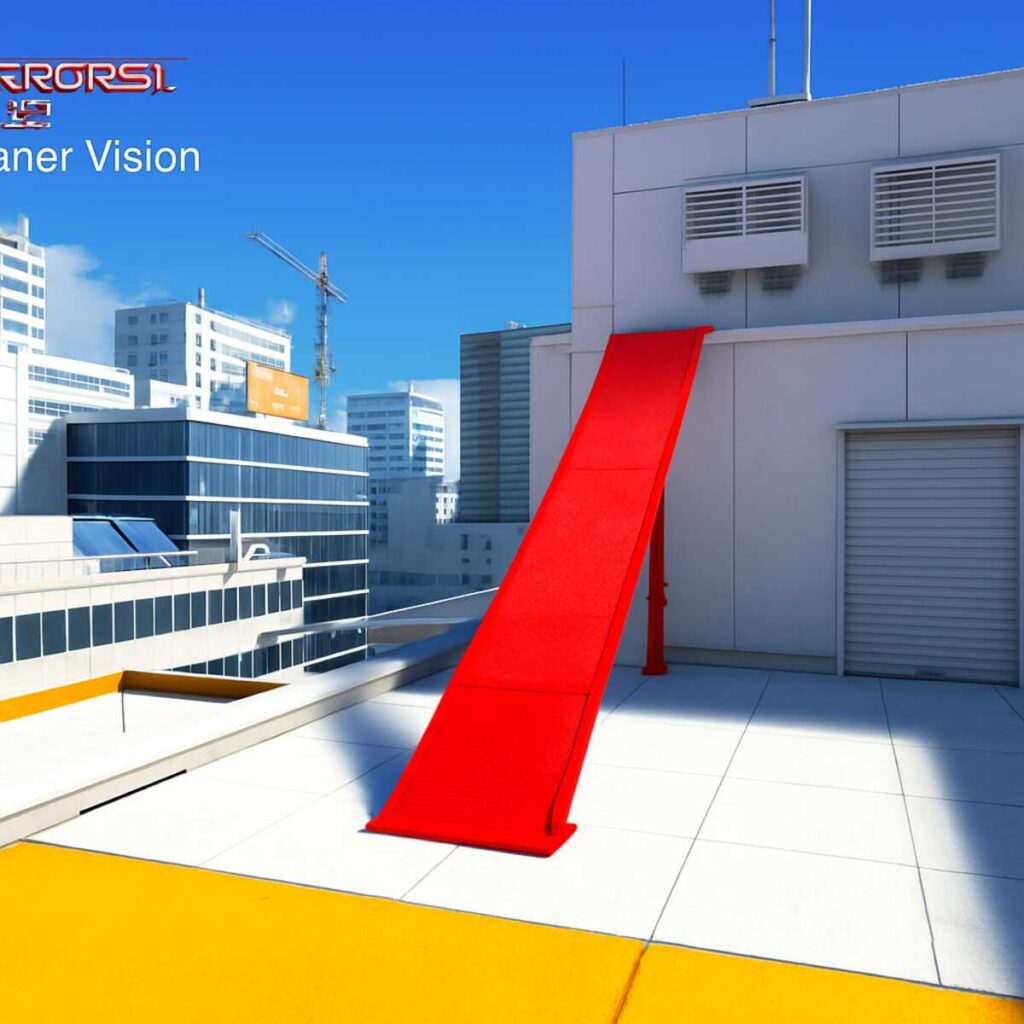
To help you navigate this sprawling city, the game uses a clever visual language. The world is mostly stark white and cool blue, but key objects on your path—a pipe to slide on, a ramp to jump from, a door to kick open—are highlighted in a bold, impossible-to-miss red. This “runner vision” acts as a silent guide, teaching you to see the environment not as a set of obstacles, but as a series of opportunities, making it a fantastic way to understand the basics of parkour flow.
Ultimately, Mirror’s Edge became the blueprint because it proved that the feeling of momentum could be more compelling than any shootout. It demonstrated that a game could be challenging, beautiful, and exhilarating by focusing on one thing: the pure, unbroken joy of movement. Its influence is still felt today, with countless developers chasing that same feeling of speed and freedom in their own creations.
The Best Modern Parkour Games You Can Play Today
The spirit of Mirror’s Edge is alive and well, but it has evolved. Instead of just creating pure parkour simulators, many of today’s developers use free-running as a powerful ingredient to enhance other game genres. It turns out that the freedom to run, climb, and leap across the environment makes everything from surviving a zombie apocalypse to exploring a futuristic city more exciting. Today, some of the best free running games for PC and consoles mix that core idea with new twists, creating experiences for every type of player.
Wondering where to start? The great news is that modern parkour has branched out. Whether you want a high-stakes challenge or a relaxing adventure, there’s a game that uses movement in a brilliant way.
- Dying Light 2: For the thrill-seeker. This game drops you into a massive city overrun by zombies, where your parkour skills are your primary tool for survival. It’s intense, action-packed, and offers fantastic multiplayer parkour experiences with friends.
- Stray: For the explorer. In this charming adventure, you play as a cat navigating a forgotten underground city. It’s a beautiful and stress-free way to experience vertical freedom as you leap across rooftops and sneak through alleyways.
- Ghostrunner: For the perfectionist. This is a fast-paced, cyber-ninja game where every move counts. It features one of the most advanced movement systems available, challenging you to chain together wall-runs, slides, and lightning-fast dashes in a dance of one-hit-kill action.

Games like Stray show just how versatile the concept of parkour can be. You aren’t being chased or fighting for your life; you’re simply using your natural agility to solve puzzles and see the world from a new perspective. Leaping from a precarious air conditioner to a rusty pipe to a hidden window ledge feels intuitive and rewarding. It captures the joy of exploration that is at the very heart of free running, proving that you don’t need high stakes to have fun with movement.
These titles are just a glimpse into a world where getting from point A to point B is the best part of the adventure. While these incredible games are well worth a look, you don’t have to spend a dime to start learning the ropes of digital parkour.
How to Start Freerunning for Free: The Best No-Cost Parkour Games
It’s one thing to read about these incredible free-running experiences, but it’s another to try them yourself. The best part is, you don’t need an expensive gaming console or a high-end computer to get started. An enormous world of free-to-play urban exploration games is waiting for you, accessible through two main gateways: your internet browser and massive creative platforms where players build the fun themselves.
Think about how easily you watch videos online. Browser-based games work the same way. There’s nothing to download or install—you just click a link and start playing instantly. This makes them perfect for quick, no-commitment fun. Countless browser-based freerunning challenges exist, designed to test your reflexes and timing in short, satisfying bursts. It’s like having a digital training course ready to go at a moment’s notice.
Beyond simple browser games lies a much larger universe: Roblox. If you’ve never heard of it, imagine a gigantic digital library where millions of people create and share their own simple games. It’s less a single game and more of a playground. Inside this playground, one of the most popular activities is, you guessed it, parkour. Thousands of creators have built sprawling obstacle courses and entire cities dedicated to movement, making Roblox parkour a genre all its own.
The sheer scale of these player-made worlds means you can find a course for any skill level, from gentle introductory paths to mind-bendingly difficult challenges. Because they are so focused on navigating obstacles, the community has a special name for these parkour maps. Getting familiar with them is your next step into this massive free-to-play world, and they’re called “Obbies.”
Your Guide to Roblox ‘Obbies’: The Biggest Parkour Playground Online
That special name the Roblox community uses—”Obby”—is simply short for obstacle course. Think of it as the digital version of a classic playground jungle gym or one of those wild courses you’d see on a TV game show. The goal is straightforward: get from the starting point to the finish line by jumping, balancing, and navigating a series of themed challenges. Because they are built by millions of different creators, no two Obbies are exactly alike, making it the most popular and accessible form of online parkour in the world.
Visually, these games often feature a distinct, blocky style with bright, contrasting colors that make each platform and hazard easy to see. The gameplay is just as direct. You’ll be tasked with timing your jumps to land on spinning platforms, walking carefully across narrow beams suspended high in the air, or weaving through a maze of laser beams. Some Obbies are long, sprawling adventures, while others, like the famously difficult ‘Tower of Hell,’ are intense vertical climbs that test your patience and precision in quick, repeatable rounds.
The best part is how easy they are to find. To dive in, you just need to open Roblox and type “Obby” into the search bar. You will instantly see thousands of options. A great way for beginners to find a quality course is to look for game icons with a high “thumbs-up” rating or a large number of current players. These indicators usually point to a well-designed and fun experience.
At first glance, these colorful block worlds might seem like a simple distraction, but they are a fantastic training ground for the parkour mindset. Playing an Obby isn’t just about reflexes; it’s about learning to judge distance, anticipate movement, and see a path where others see only barriers. This shift from just reacting to a game to actively solving a movement puzzle is a core freerunning skill, and it all starts with how you think.
Three Simple Ways to ‘Think’ Like a Freerunner and Improve Instantly
Thinking like a freerunner has less to do with lightning-fast reflexes and more to do with changing your point of view. The first, most important mental shift is to stop focusing on your character’s feet and start looking ahead. Your instinct might be to stare at the immediate ledge you need to grab, but great players are already scanning two or three moves into the future. Much like driving a car, you don’t look at the hood ornament; you look down the road to anticipate the turns. This proactive pathfinding turns a chaotic jumble of obstacles into a clear, solvable route.
Beyond simply looking ahead, the next step is to treat your movement as a continuous chain. A good parkour run is about conserving momentum. Instead of making a jump, stopping, and then setting up the next one, try to make every action flow into the next. A long leap might end in a roll that carries your speed forward, launching you perfectly toward a wall you can scramble up. This feeling of uninterrupted motion is what players call “flow,” and it’s the secret to clearing massive gaps that seem impossible from a standstill.
Finally, if a particular sequence feels impossible, resist the urge to bash your head against it. Instead, practice it in pieces. Just like learning a tricky part of a song on the piano, isolate the one jump or slide that’s giving you trouble. Practice only that small segment until it feels automatic. By breaking down frustrating challenges into manageable bits, you build both skill and confidence without burning out.
These core principles of looking ahead and maintaining flow aren’t just for first-person adventures. They are universal skills that apply to any game built around creative movement, even those that give you a completely different view of the action.
Parkour Beyond Your Own Eyes: Side-Scrollers and Top-Down Views
While many parkour games put you directly in the hero’s shoes, that’s far from the only way to experience digital freerunning. Imagine pulling the camera back to see your character move across the screen from left to right, like in a classic arcade game. This side-on view, often found in mobile games like Vector or in browser-based freerunning challenges, completely changes the dynamic of movement. It offers a new kind of challenge built on a different set of skills.
With this perspective, the focus shifts from finding your own path to perfecting your timing. The game becomes less about exploration and more like a high-speed dance, turning it into a rhythm-based platformer. Each jump, slide, and vault has a specific moment it needs to be performed to maintain momentum and clear the level. It’s a test of precision where you’re not just reacting to obstacles but flowing through a set course with pixel-perfect execution.
This same principle applies to other creative formats as well, including the rare top-down parkour platformer where you navigate cityscapes from above. The “soul” of a parkour game isn’t tied to a single camera angle. Whether you’re seeing through your character’s eyes or watching them from the side, the goal remains the same: to turn a series of obstacles into a single, beautiful line of motion.
Take the Leap: Your Freerunning Journey Starts Now
You no longer have to see a waist-high fence and accept it as a dead end. You can now recognize the difference between a game with climbing and a game about freedom. You understand that for a whole genre of parkour games, the joy isn’t just in reaching the destination, but in the breathtaking, high-speed flow of the journey itself.
With this knowledge, you’re equipped to make a simple choice. It all comes down to what you’re looking for: the smooth, cinematic thrill of an ‘Arcade’ experience, or the challenging, deeply rewarding skill of a ‘Simulator’? Answering that question is the key to finding the right game for you.
Ready to take the leap? Here’s a simple, three-step plan to go from reading this article to playing your first game:
- Decide Your Style: Do you want a relaxing ‘Arcade’ experience where movement is fluid and cinematic, or a ‘Simulator’ challenge that rewards practice and precision?
- Pick a Starting Point: Try a free ‘Obby’ on Roblox to start, or jump into a classic like Mirror’s Edge if you’re ready for a defining experience.
- See It in Action: Search for a game’s title plus “gameplay no commentary” on YouTube to get a pure, unfiltered look at how it really feels to play.
You’re no longer just a player following a path; you’re a freerunner looking for a line. The gaming world is full of opportunities built on the pure satisfaction of movement. It’s time to go find them.