

Just opened the box for Apples to Apples and want to skip straight to the fun? You’re in the right place. This guide will get you through your first hilarious round in under five minutes, no confusing rulebook required. We’ve broken it all down into simple steps so you can start playing immediately. To know more, check out okervip
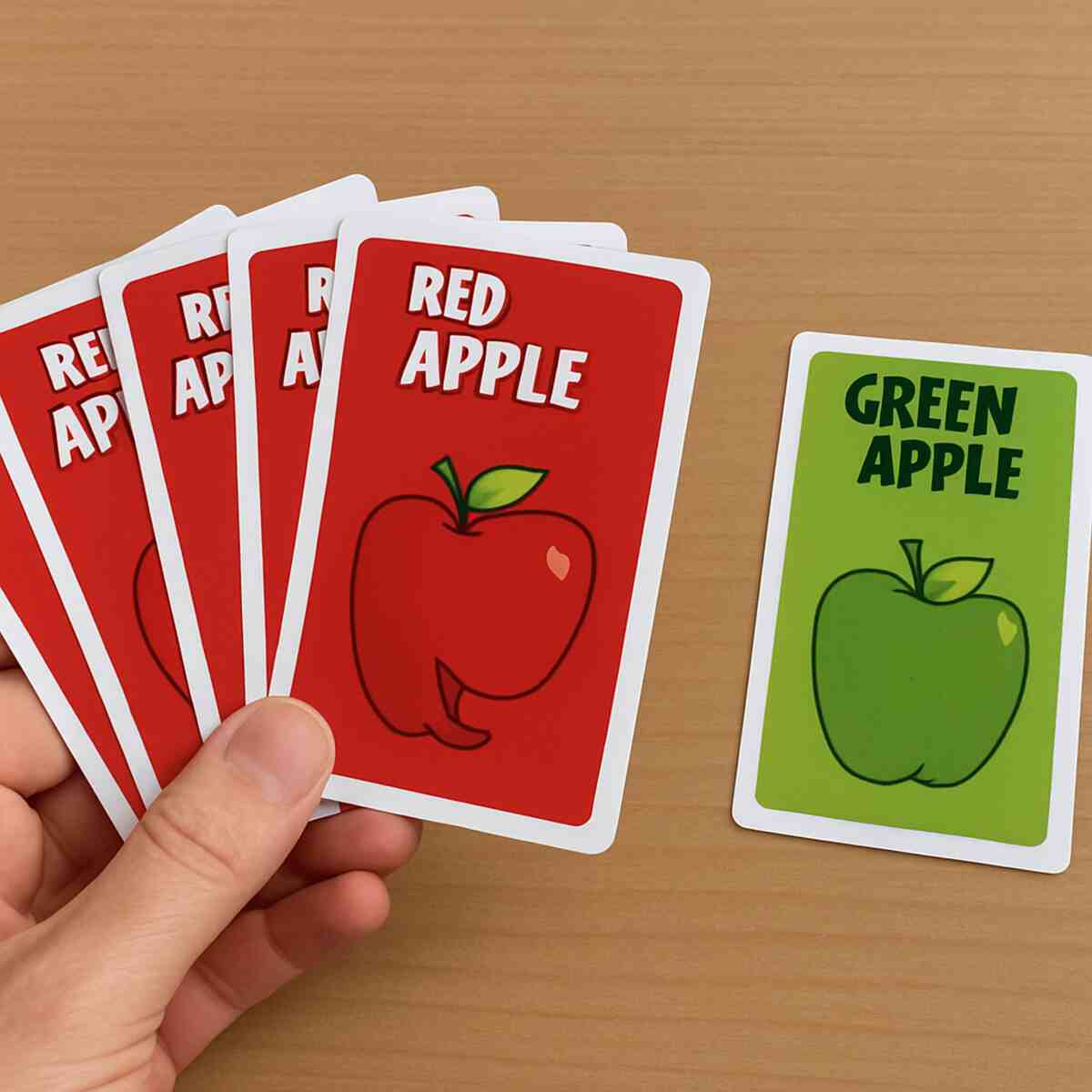
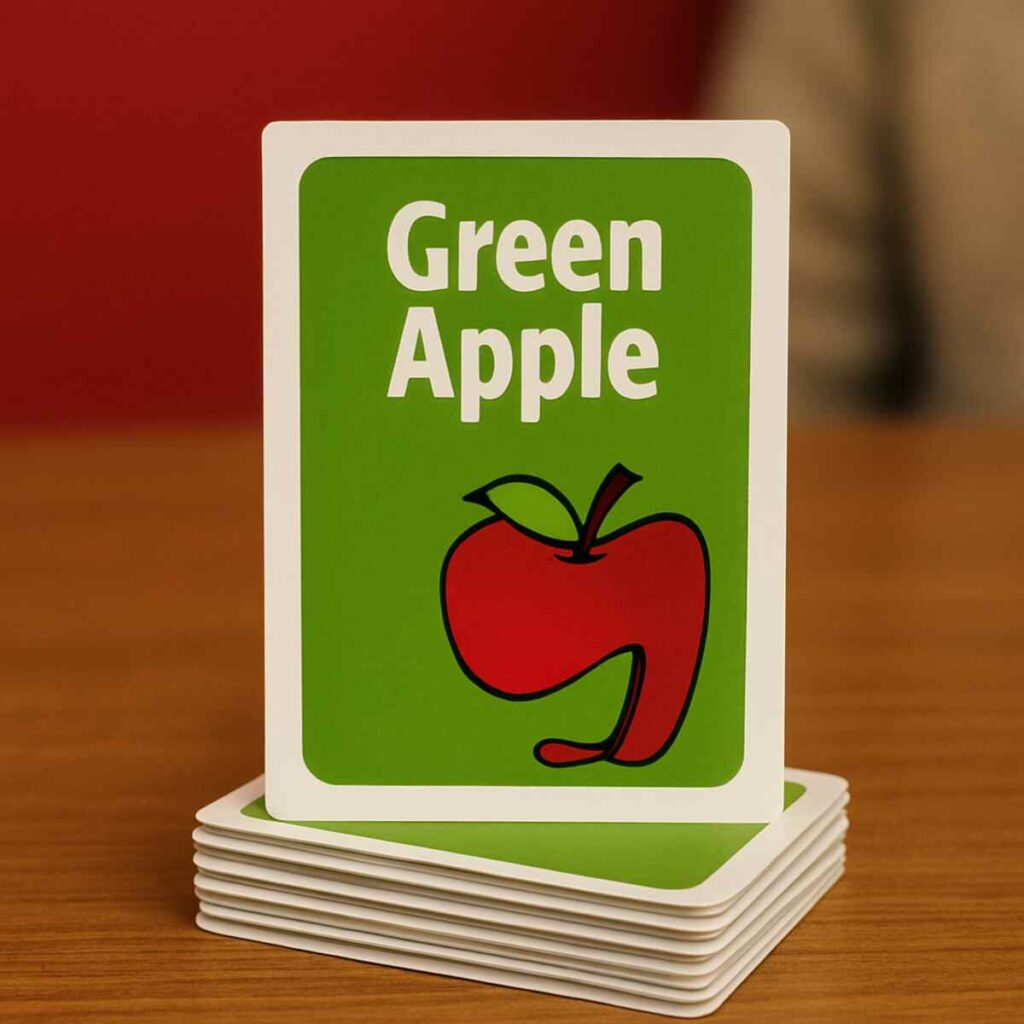
The game revolves around two types of cards. Each player gets a hand of Red Apple cards, which list nouns like “A Water Park” or “My Cat.” The round begins when one person, acting as the Judge, draws and reads a single Green Apple card, which contains a descriptive word like “Magical” or “Scary.”
The goal isn’t to find the correct match, but to play the Red Apple card from your hand that you think the Judge will find the most fitting, funny, or outrageous. The best answer is simply the one the Judge likes the most. It’s a game of hilarious opinions, not hard facts.
What You Need to Start: Setting Up the Game in 2 Minutes
Getting your Apples to Apples game ready is quick and easy. Before you do anything else, your group needs to choose one person to be the dealer and the very first Judge. A fun way to decide is to give the honor to the person who most recently ate an apple. Once you have your Judge, you’re ready to deal.
Setting up takes just three simple steps:
- The Judge shuffles the deck of Red Apple cards and deals five to each player, face down.
- Place the remaining stack of Red Apple cards in the center of the table, forming a draw pile.
- Do the same for the Green Apple cards, creating a second, separate pile nearby.
That’s it! With cards in hand and piles on the table, you’re all set to play.
How a Single Round Works: The 3-Step Core Gameplay
Now that the cards are dealt, you’re ready for the fun part. The person chosen as the first Judge will kick things off, and every round follows the same simple, three-step pattern.
- Step 1: The Judge’s Turn. The Judge starts by drawing the top Green Apple card and reading the word on it aloud (e.g., “Crunchy”). They place it face-up on the table. The Judge does not play a Red Apple card this round—their only job is to present the Green card and judge the answers.
- Step 2: The Players’ Turn. Hearing the Green card’s theme, every other player looks at the Red Apple cards in their hand and chooses the one they think makes the best, funniest, or most creative combination. Each player selects one card and places it face down in the middle of the table.
- Step 3: The Judge’s Decision. Once everyone has played a card, the Judge gathers the face-down Red Apple cards. To keep it fair, they should shuffle them before reading each one aloud. After all anonymous submissions have been read, the Judge picks their favorite card.
The player whose card was chosen wins the round! They keep the Green Apple card as a point. To start the next round, the player to the left of the old Judge becomes the new Judge, and the game continues.
The Judge’s #1 Job: Why There’s No “Correct” Answer
What makes a Red Apple card the “best” one? The Judge has complete freedom to pick the card they find the most accurate, clever, or just the one that makes them laugh the hardest. For example, if the Green card is ‘Scary,’ a Judge might get two Red cards: ‘Sharks’ and ‘My Last Haircut.’ While sharks are literally scary, the Judge might choose “My Last Haircut” simply because it’s a funnier and more surprising answer.
This subjective freedom is the secret to winning. Instead of just playing a card you think is good, try to “play to the judge.” Think about their personality. Does your friend Sarah have a goofy sense of humor? Play your silliest card. Is your grandpa a history buff? Go for a more direct, logical match. Paying attention to who is in the Judge’s seat is one of the most effective strategies.
How to Win a Round and a Game: Scoring Explained
The Green Apple card you win is more than a souvenir—it’s how you score. Think of each Green Card as one point. As you win rounds, stack these cards in front of you. This makes it easy for everyone to see who’s in the lead. The goal is simple: be the first player to collect a certain number of Green Cards.
The magic number changes depending on how many people are playing, which keeps the game length consistent. The game box suggests the following numbers:
- 4 players: 8 Green Cards to win
- 5 players: 7 Green Cards to win
- 6 players: 6 Green Cards to win
- 7 players: 5 Green Cards to win
- 8–10 players: 4 Green Cards to win
Once a player hits that target number, they are crowned the winner!
An Example Round: See How It All Comes Together
Let’s imagine a round with four players: Anna, Ben, Chloe, and David. For this round, Anna is the Judge. She draws a Green Apple card and reads it aloud: “Embarrassing.” The other three players must choose the best card from their hands to match it.
Ben looks at his cards and finds a perfect fit: “A Run in Your Pantyhose.” He places it face down. Chloe decides to go for a funny connection, playing “My First Kiss.” David, feeling mischievous, plays the random card “A Rock.” All three Red Apple cards are collected and shuffled by Anna so she doesn’t know who played which.
As the Judge, Anna reads each combination aloud. “Embarrassing… A Run in Your Pantyhose.” A solid answer. “Embarrassing… My First Kiss.” The table laughs. “Embarrassing… A Rock.” There’s a moment of silence, then a burst of laughter at the absurdity. Anna decides the funniest combination is “My First Kiss,” so she gives the “Embarrassing” Green Card to Chloe.
To end the round, Chloe places her new Green Card in her score pile. Everyone—Chloe included—draws a new Red Card to get their hand back to five. Finally, the role of Judge rotates to the left, and it’s now Ben’s turn.
What to Do When You Have No “Good” Cards
It’s a common moment: the Judge reads the Green Card, and you’re staring at a hand with nothing that seems to fit. This is your chance to go for a laugh. Find your most random, absurd card and play it with confidence. Remember how David played “A Rock” for “Embarrassing”? While it didn’t win, it made the table erupt in laughter. A hilarious but irrelevant card often gets a better reaction than a logical but boring one.
This “longshot” strategy is surprisingly effective because it breaks the pattern and creates a memorable moment. Judges are rarely looking for a perfect match; they’re looking to be surprised. Playing a completely unrelated card is always better than passing, as it keeps you in the game and might just be wild enough to win.
How to Handle a Tie: The Official Rule and a Popular Alternative
Eventually, a Judge will be torn between two excellent cards. The official tiebreaker rule is straightforward: the Judge simply has to make the tough call and pick one winner. Their opinion is the only one that matters.
For a more dramatic ending, many groups adopt a popular house rule. In this version, the two players who submitted the tied cards have 30 seconds to argue why their card is the superior match. After hearing their pleas, the Judge makes the final decision. This adds a fun, persuasive element to the game. Deciding on your tie rule beforehand is a great way to prevent arguments.
Spice It Up: 3 Popular House Rules for a New Twist
Once you’ve mastered the basics, introducing house rules is a fantastic way to keep the game fresh. These popular variations change the dynamic just enough to make it feel brand new.
Here are three of the best house rules for Apples to Apples:
- Card Czar: The Judge doesn’t just pick a winner; they also pick the worst card played. The “loser” might have to perform a silly, harmless penalty, like talking in a robot voice for a round.
- Reverse Apples: Flip the game on its head! Deal each player seven Green Apple cards. On their turn, the Judge draws a Red Apple card, and players choose a Green card from their hand that best fits.
- Perfect Pairs: Instead of one card, you play two! When the Judge reveals the Green Apple card, players must choose two Red Apple cards from their hand that, when combined, create the ultimate match.
Apples to Apples vs. Cards Against Humanity: Which Is Right for Your Group?
How does Apples to Apples compare to Cards Against Humanity? While both use a similar judge-and-submit rule, their tones are worlds apart. The decision comes down to the type of humor your group enjoys and who is in the room.
The key difference is the content. Apples to Apples is designed for clever, witty, and often silly comparisons appropriate for a wide audience, making it a family-game-night staple. By contrast, Cards Against Humanity is strictly for adults and intentionally uses offensive, shocking, and taboo topics to generate humor.
Choosing between them is about knowing your crowd. If you want a game that everyone from grandkids to grandparents can play together, Apples to Apples is the clear winner. If your group seeks edgy, adults-only humor, the other game might be your pick.
Growing Your Game: A Quick Guide to Other Versions and Expansions
Once you fall in love with the original game, you might wonder how to share it. For family nights with younger children, the Apples to Apples Junior version is the perfect solution. The rules are identical, but the cards feature topics chosen for players ages 9 and up.
For playing with a large group, the Party Box is your best friend. This edition comes packed with a massive number of cards, ensuring you have plenty of wild combinations to keep six or more players entertained.
If you simply want to refresh the base game, look for expansion packs. These smaller, themed sets are the most affordable way to add hundreds of new Red and Green Apple cards to your deck, keeping your game nights feeling fresh.
You’re Ready to Play: Go Host Your Hilarious Game Night
You have everything needed to turn that box of cards into an evening of laughter. Remember the simple loop: the Judge plays a Green card, players submit a Red card, and the Judge picks their absolute favorite.
The real magic of this classic party game is in discovering what your friends find hilarious, clever, or just plain weird. The only rule that truly matters is that the Judge’s opinion is law. Now gather your friends, deal the cards, and get ready for some unforgettable comparisons.
